
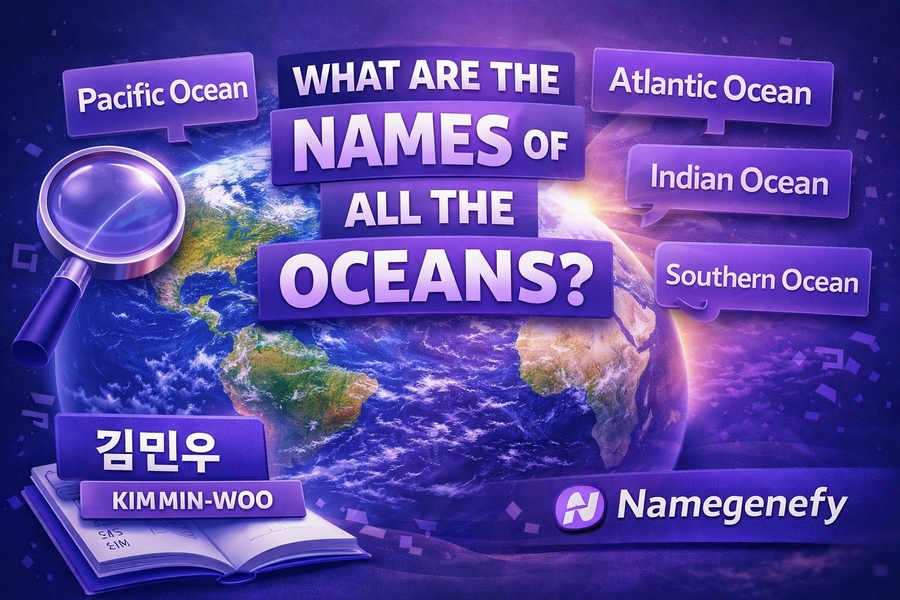
The oceans are vast and cover over 71% of the Earth’s surface, making them crucial for the survival of all living things. They play a vital role in regulating the planet’s climate, supporting marine life, and facilitating global trade.
There are five major oceans that divide the world’s water into distinct regions, each with its unique characteristics. Understanding the names and the historical significance of these oceans will provide you with valuable knowledge about the Earth’s water systems.
In this article, we’ll take a deep dive into the five oceans that make up the Earth’s vast water bodies. These oceans are the Pacific, Atlantic, Indian, Arctic, and Southern Oceans. We will explore their names, significance, and interesting facts that highlight their importance in global geography.
The Pacific Ocean
The Pacific Ocean is the largest and deepest of all the oceans, covering more than one-third of Earth’s surface. Stretching over 63 million square miles, it is also home to the Mariana Trench, the deepest part of the ocean at over 36,000 feet. This ocean separates the continents of Asia and Australia from the Americas, with its expanse influencing global weather patterns and trade routes.
The name “Pacific” comes from the Latin word “pacificus,” meaning “peaceful.” The explorer Ferdinand Magellan coined this term during his 1520 journey, as he encountered calm waters while crossing the ocean. This ocean is known for its active tectonic plate boundaries, creating frequent earthquakes and volcanic activity in the “Ring of Fire.”
The Pacific Ocean also boasts diverse ecosystems, from the coral reefs of the Great Barrier Reef to the icy waters of the Arctic. With such variety, the Pacific is home to an abundance of marine life, making it vital to the Earth’s biodiversity.
For a smart name generator for every need, use the smart name generator for every need.
The Atlantic Ocean
The Atlantic Ocean is the second-largest ocean and separates the Americas from Europe and Africa. It spans over 41 million square miles, with a vast range of ecosystems, including the Gulf Stream and the Bermuda Triangle. The Atlantic Ocean plays a key role in weather patterns, especially the distribution of heat from the equator to the poles.
The name “Atlantic” comes from Greek mythology, where the ocean was considered the realm of the Titan Atlas, who held the world on his shoulders. The ocean has been crucial throughout history for the exploration and expansion of global trade, with major shipping routes running across it.
Another noteworthy feature of the Atlantic is its role in ocean currents. The warm Gulf Stream brings warm waters to northern Europe, significantly impacting the climate of places like the United Kingdom. Moreover, the Atlantic’s deep-sea ecosystems are home to a wide variety of species, many of which remain unexplored.
If you’re interested in how to come up with character names, learn how to come up with character names.
The Indian Ocean
The Indian Ocean is the third-largest ocean, covering an area of 27 million square miles. It is located primarily between Africa, Asia, Australia, and the Indian subcontinent. This ocean is particularly important for trade routes, especially due to its proximity to key economic regions in Asia and the Middle East.
The name “Indian Ocean” was chosen due to its proximity to India, a country with which the ocean has shared historical, cultural, and economic ties. This ocean is also the warmest of the world’s oceans, which significantly influences its weather patterns and makes it a key factor in global monsoons.
Marine biodiversity in the Indian Ocean is incredibly rich, with coral reefs and unique marine species found in places like the Seychelles and the Maldives. The Indian Ocean also plays a crucial role in regulating the climate and supporting fisheries that are vital for many coastal communities.
The Arctic Ocean
The Arctic Ocean is the smallest and shallowest of the five oceans, located primarily around the Arctic region. It covers an area of about 5 million square miles and is bordered by the continents of North America, Europe, and Asia. Unlike other oceans, the Arctic Ocean is unique because much of its surface is covered by ice, especially in winter.
This ocean is known for its extreme conditions, with temperatures often plunging below freezing, making it one of the harshest environments on Earth. The name “Arctic” is derived from the Greek word “arktikos,” meaning “near the bear,” referring to the constellation Ursa Major, which is visible in the northern sky.
The Arctic Ocean plays a significant role in regulating the global climate by distributing cold water to other oceans and affecting weather patterns in the Northern Hemisphere. As climate change accelerates, this ocean is becoming increasingly important in discussions about the melting ice and rising sea levels.
The Southern Ocean
The Southern Ocean, sometimes referred to as the Antarctic Ocean, is the fourth-largest and most recently named ocean. It surrounds Antarctica and is defined by the waters south of 60 degrees latitude. The Southern Ocean is unique because it is the only ocean that entirely encircles a continent, with currents that flow from west to east around Antarctica.
The name “Southern Ocean” was officially recognized by the International Hydrographic Organization in 2000, though it had previously been considered part of the Atlantic, Pacific, and Indian Oceans. The ocean is known for its harsh conditions, with cold waters and powerful currents.
One of the most important features of the Southern Ocean is its role in the global climate system. The ocean’s currents help regulate the Earth’s heat balance by transferring warm waters from the equator to the poles. It is also home to a variety of unique marine species, including penguins, seals, and a wide range of fish.
Conclusion
The world’s oceans are fascinating bodies of water that are essential to life on Earth. From the vast Pacific to the cold waters of the Arctic, each ocean plays a crucial role in maintaining the Earth’s climate, ecosystems, and global trade routes.
The names of these oceans reflect both their geographical significance and the history behind their discovery. By understanding these oceans, you gain a deeper appreciation for the planet’s natural resources and their importance to our survival.
With a global understanding of the oceans’ vastness and significance, it becomes easier to grasp the importance of preserving these marine ecosystems for future generations. Whether you are interested in geography, marine biology, or global trade, knowing the names of the oceans and their unique characteristics can provide invaluable insight into our planet’s future.
FAQs
How many oceans are there?
There are five oceans on Earth: the Pacific, Atlantic, Indian, Arctic, and Southern Oceans. These oceans cover over 71% of the planet’s surface and are crucial for regulating the climate, supporting marine life, and global trade routes.
Why is the Southern Ocean considered separate from others?
The Southern Ocean was officially recognized in 2000 by the International Hydrographic Organization. It surrounds Antarctica and is unique because it flows continuously around the continent, distinct from the Pacific, Atlantic, and Indian Oceans.
What is the largest ocean in the world?
The Pacific Ocean is the largest ocean, covering over 63 million square miles. It also holds the record for being the deepest, with the Mariana Trench being the deepest point, reaching over 36,000 feet below sea level.
What does the Atlantic Ocean separate?
The Atlantic Ocean separates the Americas from Europe and Africa. It is the second-largest ocean and plays a significant role in global trade and climate regulation, with major currents like the Gulf Stream impacting weather patterns.
How did the Atlantic Ocean get its name?
The Atlantic Ocean is named after the Greek Titan Atlas. Ancient Greek mythology described Atlas as holding the sky on his shoulders, and the ocean that lay to the west of Europe was named after him.
Why is the Arctic Ocean so unique?
The Arctic Ocean is the smallest and shallowest of the five oceans. Located mostly within the Arctic Circle, it is mostly covered by ice, and it plays a key role in Earth’s climate regulation and the polar ecosystem.
What is the Indian Ocean known for?
The Indian Ocean is known for its warm waters and significant importance in global trade routes. It separates Africa from Asia and is home to vital ecosystems like coral reefs. It also heavily influences monsoon weather patterns.
How deep is the Pacific Ocean?
The Pacific Ocean is the deepest of the five oceans, with depths reaching over 36,000 feet at the Mariana Trench. This ocean also contains the largest amount of the world’s ocean water, covering a vast area of the Earth’s surface.
How does the Southern Ocean affect global climate?
The Southern Ocean plays a critical role in regulating Earth’s climate by circulating cold waters and influencing heat transfer between the equator and the poles. It helps maintain the planet’s overall temperature balance, impacting weather patterns globally.
What creatures live in the Southern Ocean?
The Southern Ocean is home to unique species such as penguins, seals, krill, and a variety of fish. These species have adapted to the extreme cold temperatures, and the Southern Ocean plays a key role in sustaining these ecosystems.