
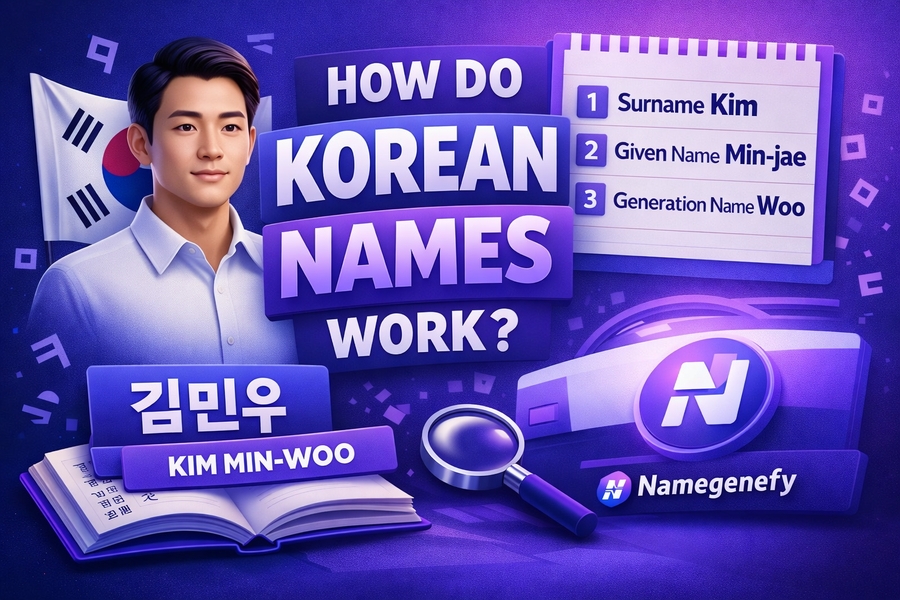
Korean names have a unique structure and cultural significance that make them stand out from other naming conventions. Unlike Western names, Korean names typically consist of a family name followed by a given name, but there is much more to their meaning than just their format.
In this article, we will explore how Korean names work, their components, and the cultural practices that influence them.
Understanding the Basic Structure of Korean Names
Korean names are typically composed of three syllables: a one-syllable family name followed by a two-syllable given name. The family name is passed down through generations and is shared by all members of a family. The given name, however, is unique to each individual and is carefully chosen based on factors such as the meaning of the characters used and the desire for balance and harmony in the name.
The family name is often simple, consisting of a single character. Common Korean family names include Kim, Lee, and Park. These names are so widespread that more than 20% of the Korean population shares just a few surnames. For example, “Kim” is the most common surname in Korea, held by nearly 21% of the population.
When it comes to given names, parents usually choose two characters, each with its own meaning. The first character in the given name represents a concept or virtue, while the second character can denote a generational name. This generational name is shared by all the children in a particular generation, allowing families to trace their ancestry with great precision. You can see how this practice plays into Korean naming culture when you consider the rich heritage and the historical importance of each name.
The process of selecting a name involves more than just the desire for it to sound nice; it requires careful consideration of its meaning. Traditionally, names are chosen based on the principles of Chinese characters, or Hanja, which can symbolize various virtues, elements, or aspirations. Each name has an underlying meaning that reflects the values and hopes the parents have for their child.
Why Are Korean Family Names So Common?
Korean surnames are widely shared, with just a few being prevalent across the country. As mentioned, Kim, Lee, and Park are the most common family names, and they are held by millions of Koreans. This phenomenon has roots in Korean history, where surnames were often limited to the royal family, aristocrats, and certain noble classes.
The concentration of surnames stems from Korea’s historical social structure, in which family lineage and ancestral ties were highly valued. During the Goryeo Dynasty (918–1392), the ruling class and the aristocracy were granted specific surnames, which were passed down through generations. Over time, these surnames spread across the population as the aristocracy had many descendants.
Today, this tradition remains intact, with most Koreans belonging to one of a limited number of family names. While it may seem challenging for many individuals to identify with their family name, it actually holds cultural significance. The prevalence of these common surnames emphasizes the importance of family identity and heritage in Korean society.
If you’re curious about other global naming trends and why certain cultures have adopted specific naming systems, the smart name generator for every need can provide interesting insights. The generator lets you explore various naming conventions and adapt them to your preferences.
Generational Names: A Korean Tradition
One of the unique aspects of Korean names is the use of generational names. In many Korean families, the first syllable of a given name is shared among siblings of the same generation. This tradition helps families trace their genealogy and fosters a sense of unity within the family.
For example, in a family where all siblings have names that start with “Jin,” such as Jin-seo, Jin-ah, and Jin-woo, the “Jin” portion of their names represents their shared generational connection. This generational naming practice dates back to the Joseon Dynasty (1392–1897), when families used it to honor their ancestors and maintain continuity through the generations.
This practice is not universally followed today, as some parents choose to deviate from generational names in favor of more distinctive, individualized ones. However, it remains important in many families, especially those with strong traditional ties. The use of generational names underscores the deep connection between individual identity and family heritage in Korean culture.
The Influence of Hanja: Chinese Characters in Korean Names
A significant component of Korean names is the use of Hanja, Chinese characters that lend deeper meaning to the name. Hanja were used in Korea for thousands of years and are still employed today, particularly in names. In fact, many Korean names are written in Hanja, and the choice of characters can profoundly influence the name’s meaning.
Each Hanja character has its own meaning and pronunciation. For example, the Hanja character “진” (Jin) can mean “precious,” “truth,” or “benevolence.” Therefore, parents often select characters based on the meaning they wish to impart to their children. The combination of these characters creates names that are not only unique but also imbued with values and aspirations.
The process of selecting appropriate Hanja characters for a given name is not taken lightly. Parents may consult with experts in Hanja or use naming books that provide suggestions for auspicious characters. In modern Korea, while some people opt for purely Korean names without Hanja, the influence of Chinese characters remains significant in naming.
As you delve deeper into the traditions of Korean names, it becomes apparent that the significance of each character is paramount. If you’re interested in understanding more about naming conventions, learn why Spanish people have two last names to explore how naming conventions differ in other cultures.
Gendered Naming Traditions in Korea
Korean names often reflect traditional gender roles, with certain names being more commonly given to males and others to females. While there is no strict rule that limits the naming of children based on gender, there are societal expectations about which names are suitable for boys and which are more appropriate for girls.
For example, some names are reserved for males, often chosen for their strong meanings, while names for females may have gentler, more delicate meanings. Names like Jiwon and Minji are often given to females, whereas names like Seojin and Jiho are more common among males. However, these naming conventions are becoming more fluid in modern times, and many Korean parents choose unisex names for their children.
Despite the trend toward gender-neutral names, it is still common for names to be gendered in Korean society. Gender-specific names reflect the traditional values of Korean culture, where gender roles have historically been more defined.
The Impact of Modern Naming Trends
In recent years, naming trends in Korea have become more diverse. While traditional names continue to be passed down, younger generations of parents are increasingly opting for modern, unique names that break away from historical norms. These names may be inspired by global trends, popular culture, or even Western names.
Some Korean parents choose to give their children names that are easier to pronounce internationally or that reflect modern sensibilities. For instance, names like Hana or Mia are becoming more common in Korea, as they are short and easy to pronounce in both Korean and English. This shift reflects the growing influence of globalization on Korean culture and naming practices.
Despite these modern trends, traditional Korean names are still widely used, especially in formal contexts. The balance between tradition and modernity in Korean naming practices is a reflection of the dynamic nature of Korean society.
Conclusion
Korean names are a fascinating blend of tradition, culture, and meaning. From the structure of family and given names to the use of generational names and Hanja characters, Korean naming conventions are rich in history and significance. These names not only identify individuals but also reflect the values and aspirations of their families.
Whether you are learning about Korean names out of curiosity or for a deeper understanding of Korean culture, it’s clear that names in Korea are more than just labels. They carry with them centuries of tradition and hold deep familial and cultural importance.
Understanding the structure and cultural context of Korean names is key to gaining insight into Korean identity and society. As you explore these naming practices, remember that names are not only identifiers but also carry powerful meanings that connect individuals to their family history and cultural heritage.