
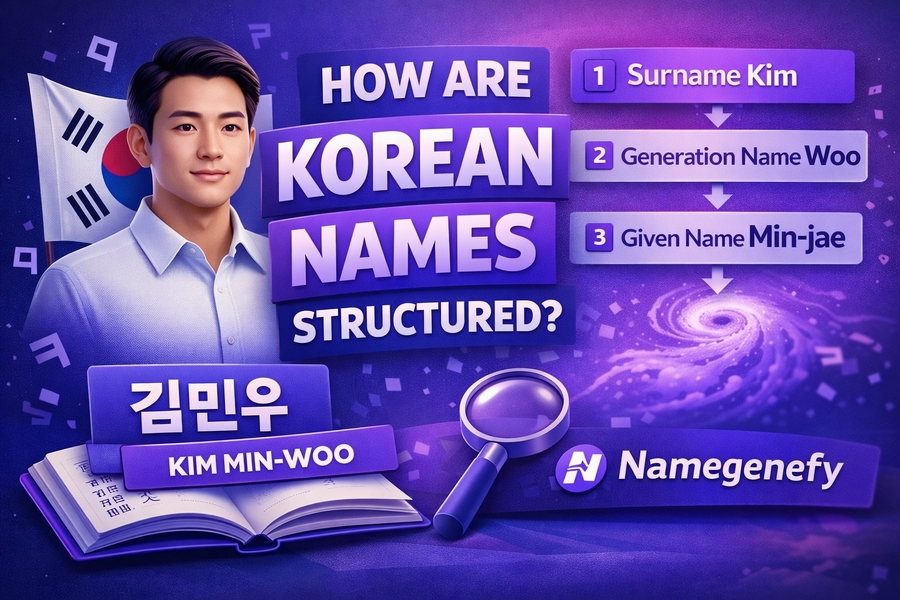
Korean names are deeply ingrained in the culture, reflecting traditions that have evolved over centuries. The structure of Korean names is unique, and understanding it is crucial for those curious about Korean culture or dealing with Korean names in professional or academic settings.
This article will break down the elements of Korean names, their cultural significance, and their structure, offering valuable insights into their usage and evolution.
The Basic Structure of Korean Names
Korean names generally consist of a family name (one syllable) followed by a given name (typically two syllables). For instance, in the name “Kim Ji-woo,” “Kim” is the family name, and “Ji-woo” is the given name. The family name is always placed first, which distinguishes it from Western naming conventions. This structure is deeply rooted in Korean traditions and remains consistent across various generations.
The family name is incredibly important in Korean society. With only about 300 family names in use, surnames like Kim, Lee, and Park are extremely common. These family names often trace back to specific clans or geographic regions, which play a significant role in family heritage. The choice of a given name is also meaningful and can carry aspirations for the child’s future.
Korean names are often chosen based on their meaning and the characters used to write them. The use of hanja (Chinese characters) adds depth to a name, with each character symbolizing certain traits or virtues that parents hope their child will embody. As a result, naming a child is highly symbolic and personal.
You can learn more about the smart name generator for every need, which can help you understand the significance behind Korean names.
The Importance of Family Names in Korean Culture
Family names are not just identifiers; they are integral to the social structure in Korea. The family name is passed down through generations and represents the family’s heritage, historical legacy, and ancestral origins. In traditional Korean culture, the family name is considered paramount, which is why many individuals are more likely to be recognized by their family name than by their given name.
With common surnames like Kim, Lee, and Park, many Koreans share the same family name. This shared ancestry often creates confusion, especially in formal settings. Despite this, the connection to one’s family lineage remains significant. In Korea, people often identify their family origin by the region or clan from which their surname originates, which helps distinguish among many individuals sharing the same surname.
Interestingly, Korean family names were historically linked to specific villages or regions, making them an important part of one’s social identity. This is why surnames like “Lee” or “Kim” are often associated with particular areas in Korea, contributing to the person’s sense of belonging to that community.
The social function of surnames is evident in how Koreans address one another, especially in formal or professional settings. The use of a person’s surname followed by an honorific is common in Korea, showing respect for the family’s history and its contributions to society.
For example, Koreans address people by their surname followed by “-san” or “-ssi” to convey respect. This practice highlights the social importance of the family name and its connection to the person’s identity within society.
Given Names and Their Cultural Significance
In contrast to the family name, the given name holds great meaning in Korean culture. The structure of a given name typically consists of two syllables, each of which has specific meanings. The first syllable is often intended to reflect a characteristic or aspiration for the child. The second syllable typically complements the first and adds another layer of meaning.
For example, in the name “Ji-woo,” “Ji” can mean wisdom or intellect, while “woo” might symbolize kindness or prosperity. Together, the name can be interpreted as meaning “wise and kind.” Choosing a meaningful given name is important in Korea, as it reflects the parents’ hopes for their child’s future.
The meaning of each syllable in the given name is often derived from hanja, which adds further depth to the name. Hanja characters carry rich meanings, and selecting the right ones for a child’s name can influence how others perceive that person. This tradition is rooted in Confucian principles, where the meaning of names is closely linked to a person’s moral values and social role.
As part of this cultural practice, selecting a given name is a careful process. Parents might consult a naming expert or use a traditional method of choosing characters that will bring good fortune. This meticulous approach ensures that each name carries the right meaning and is aligned with the family’s values.
The Role of Generational Names
Generational names are another important aspect of Korean naming conventions. These names are shared among siblings, with one syllable of the name passed down to each child in a family. This tradition stems from Confucianism, which emphasizes the importance of family ties and the continuity of the family line.
In many families, a specific syllable is chosen to represent the children’s generation. For example, if the first-born child’s name includes the syllable “Ji,” the second child’s name might also include this syllable. This practice helps to maintain a sense of continuity and tradition within the family. It also signifies the child’s place in the family’s generational structure.
Generational names are often used in conjunction with other naming elements, such as the family name and the individual’s given name. In some cases, the generational name is placed in the middle of the given name to further emphasize the child’s place in the family hierarchy.
By following this system, Korean names not only reflect an individual’s identity but also their position within the larger family structure. This reinforces the importance of family and generational continuity in Korean culture.
Modern Trends in Korean Naming
While traditional Korean names remain deeply ingrained in society, modern trends have begun to influence naming conventions. Many parents today opt for names that are shorter or easier to pronounce, especially for those who will be interacting in international settings. This shift reflects a more globalized world, where names are often anglicized or simplified to make them easier to understand for non-Koreans.
The use of English names alongside Korean names has also become increasingly common, particularly for younger generations. Many Koreans now use an English name for professional or international purposes, which makes it easier to navigate a globalized society. However, their traditional Korean name still holds cultural significance and is used in more personal or family contexts.
Despite these modern changes, the core values behind Korean names—such as respect for family, heritage, and tradition—remain central to the naming process. In fact, the popularity of traditional names continues, and many parents seek out unique, meaningful names for their children that reflect both modern sensibilities and traditional Korean values.
In today’s world, it’s more important than ever to understand the meaning and significance behind Korean names. The tradition of choosing a name with deep meaning and cultural importance remains a vital part of Korean identity.
You can read about why many black people have white last names and how naming conventions differ across cultures.
Conclusion
Understanding the structure and significance of Korean names provides valuable insight into Korean culture and traditions. Whether you’re interested in the meaning behind the names or how they reflect family heritage, knowing the basics can help you navigate social interactions in Korea with greater respect and understanding.
Korean names are not just labels but are deeply connected to a person’s identity, family history, and cultural values. If you want to learn more about naming conventions and the cultural significance of names, you can always refer to helpful resources like the smart name generator for every need.